
Catalyst
A summer day dawns, and the hot sun begins its climb into the sky. Diurnal heating stirs up the air, creating lift and instability. A few hours after solar noon, cumulonimbus clouds roam the skies, big bullies lurking about the atmosphere, waiting to pounce. Lightning pierces the air and thunder echoes across the mountain peaks. Somewhere, lighting makes contact with the earth, perhaps through a towering conifer. In the following hours, the interior of this tree or the duff around it may simmer and smolder, nothing more than some puffs of smoke, as the fire lingers, unnoticed. But given the right conditions as the following days pass, this little wisp of a burn can erupt into an outright conflagration, and suddenly, the surrounding forest is at the mercy of the forces of nature.
Chaos
Like most destructive forces of nature, wildfire can bring us to our most base level of insecurity. Wildfire elicits fear, panic and a sense of helplessness. The heat of the flames envelops your skin, the roar of the movement through the landscape fills your ears, the thick, acrid air punches your lungs. Wildfire is violent, often unpredictable, overpowering, and, at its simplest form, purely raw. It can cause utter devastation, leaving in its wake total desolation; the visual landscape leaves us speechless and hopeless, the in-person experience evoking a sharp emotional response, despair in a tangible form.
But wildfire can also be a thing of incredible beauty, a reminder of the power of healing and a catalyst for rebirth and a childlike wonder of the intricate and intimate workings of the earth and its ecosystems.
Crescendo
In August 2015, lightning sparked the Goodell Creek Fire near the town of Newhalem, WA. Tucked in an evergreen canyon along Washington State Route 20, better known as the North Cascades Highway, Newhalem is a “company town” operated by regional utility Seattle City Light, which owns 3 hydroelectric dams along the upper portions of the mighty Skagit River. Resting in the heart of Ross Lake National Recreation Area, the adjacent wildlands cross into North Cascades National Park.
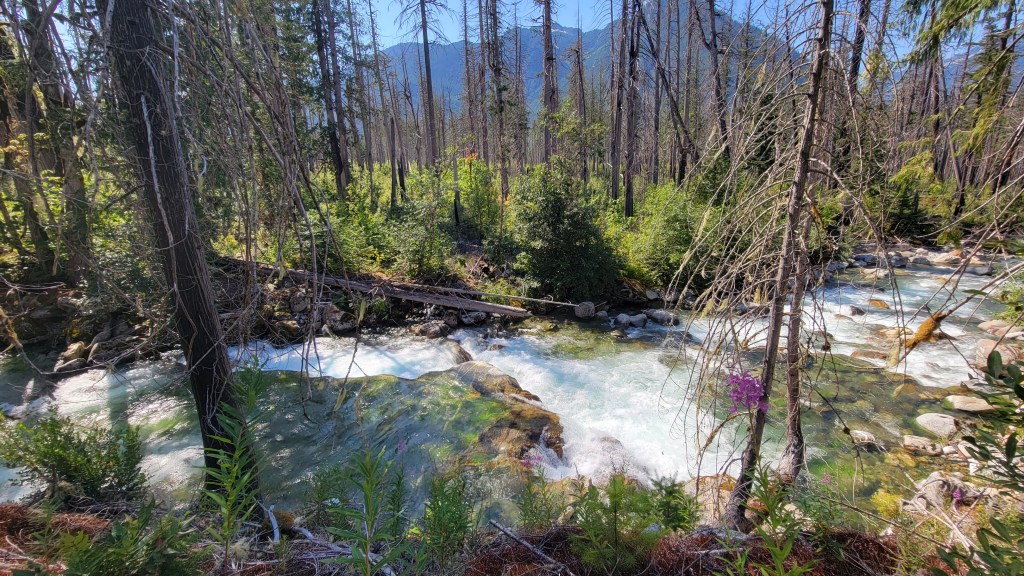
After an initial smolder period, the blaze had grown to thousands of acres within just a few days. Flames leapt across SR 20 and the Skagit River; the highway was shut down, Newhalem and nearby Diablo were evacuated, and nearby National Park Service facilities were shuttered. As fire personnel battled through challenging conditions and erratic behaviors, the Goodell Creek Fire churned through close to 7,000 acres before significant rainfall in the area ultimately allowed crews to establish containment. Flames had scorched the surrounding mountains, leaving a patchwork of charred forest and ghostly blackened tree trunks. Popular trails including the River Loop Trail and Rock Shelter Trail were rendered unusable, the C-Loop of Newhalem Creek Campground was a wasteland of ash and soulless shells of conifers. The fire had even come to within a few hundred feet of the North Cascades National Park visitor center, its fingertips stretching out and falling just short at the last moment. Any viewing of the landscape would indicate a long process of recovery ahead.

Convalescence
Fast-forward to 2024. Now in the 9th growing season after the fire, the landscape does not look much different at first glance. The hillsides still host hundreds of skeleton trees, looming over the highway and the town, remnants of woodland sentinels, now reduced to nothing more than a blackened memory. With the iconic PNW forestland look erased from the landscape, the hills provide a lasting reminder of the devastation of the fire. But peer a little closer, and notice the shades of green carpeting the forest floor. Pull off the highway, get out of your vehicle, and closely examine your surroundings. Before you, take in 9 years of growth, healing and recovery, 100% the efforts of nature, unassisted by man. Life. Hope restored.


Contemplation
Just a short drive from the visitor center, one of my favorite places to view this rebirth is the Rock Shelter Trail. An accessible, gentle-grade trail of a little more than half a mile (roundtrip), the Rock Shelter Trail (and an adjoining path along Newhalem Creek) meanders through the burn scar, ending at an elevated boardwalk overlooking a 1,400-year old native hunting camp above the creek. As a forest wanderer, I am immersed in the power of healing. I find myself in reverent awe of nature’s ability to restore, and, even just for a few moments, enjoy an outlook of optimism and sense that everything bad and negative may someday be righted and at peace.


Despite the proximity to the visitor center and campground, this trail system is one of the lesser-utilized in the area. Many visitors are simply turned off by the idea of hiking through a burn scar, finding the image ugly or lacking. It simply doesn’t measure up to the criteria so many hold for what makes a “good” hiking trail. We expect to be spoiled with something amazing, indescribable beauty, a grand view that shows how small we are in the world.


Captivation
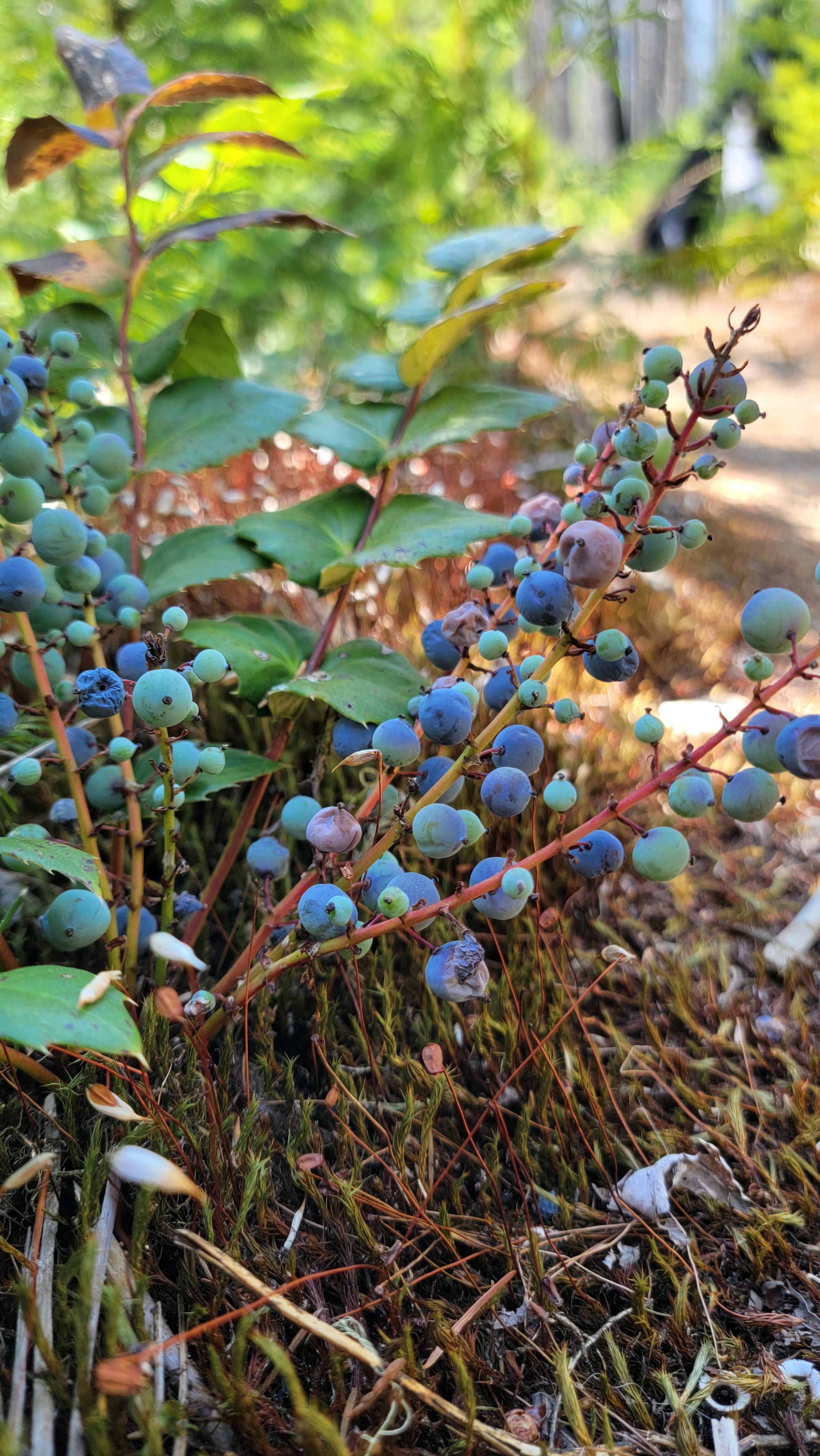
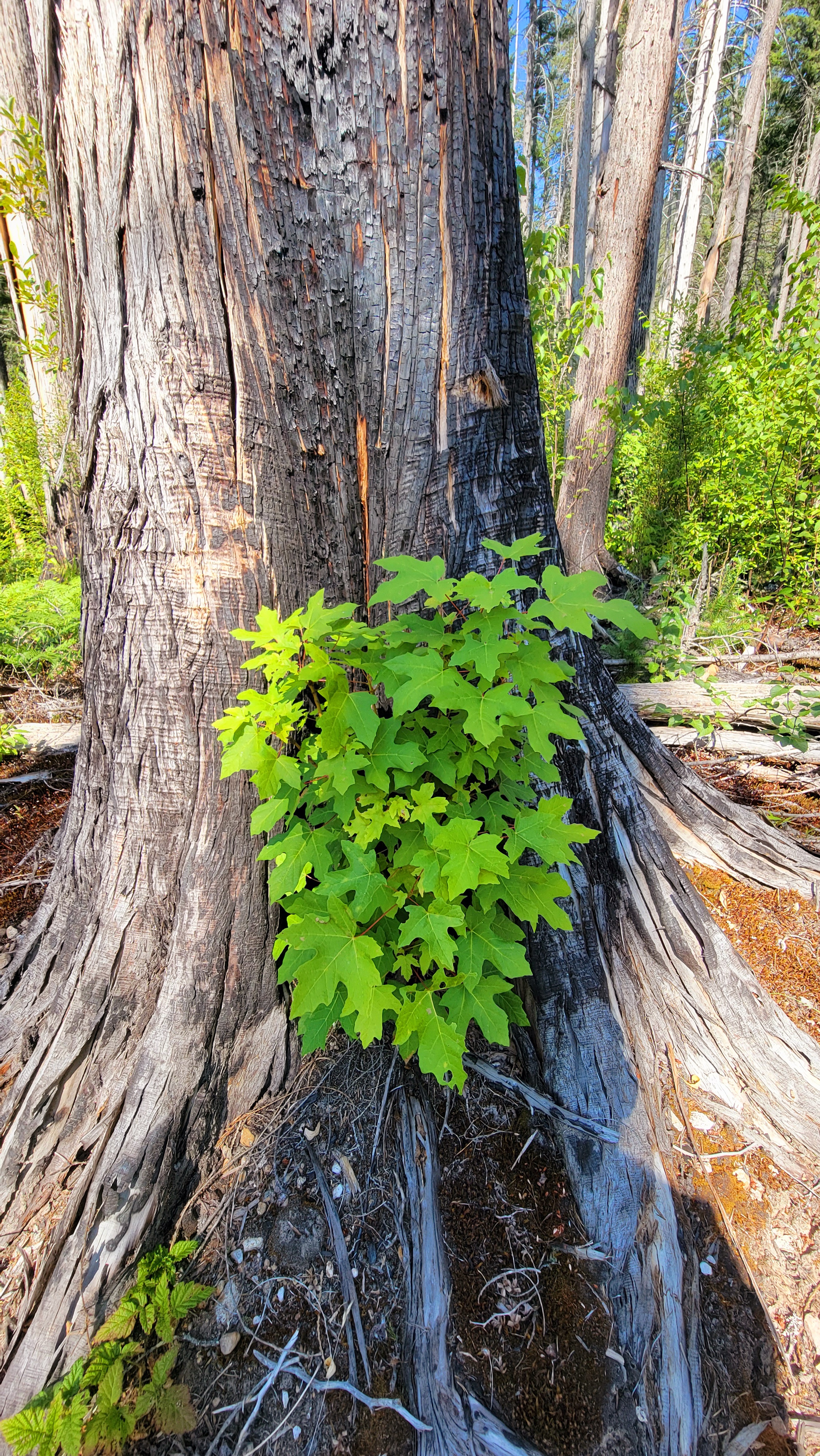
But I would argue a trail such as this one near Newhalem Creek absolutely does check all those boxes. Seeing the live processes at work IS amazing and somewhat indescribable. I cannot help but stop and marvel at the robust growth of the plants, the sheer number of saplings, and the height of some of the most aggressive growers. On a recent walk earlier this spring, I counted 18 thriving native plant species, from bigleaf maple and birch, western red cedar to western hemlock, low Oregon grape to bracken fern, fireweed to pearly everlasting, thimbleberry to red huckleberry. The growth is healthy and strong; conifer tips unfurl in bright green, deep pink or purple berries burst forth from twigs, and eye-catching blooms invite a range of pollinators. Some of the deciduous starts extend above my head level, and fern fronds crowd the fringes of the trail. Old tree remnants play host to saplings, with some stumps occupied by 3 or 4 or 5 little conifers. Other trees have fallen to the earth, and sit in various stages of decay, often assisted by various fungi.



Consideration
Of course, no 2 fires are ever the same. Some burn more intensely than others, causing a higher degree of destruction on the landscape; often this can affect the recovery time of a burn scar. Some burn in more significant locations, affecting whole communities and the livelihoods of many. But wildfire has a long history across the majority of the western part of the continent, and is especially connected with the very first inhabitants of these areas. Most local residents have a longtime familiarity with wildfire season and can recall numerous memorable fires over the years; some have personal connections with working on the fireline firsthand. All of these points could be discussed at length, but that is for another time.
This is not to say the impacts of fire on person and community are not important. They very much are, and the thought of wildfire can reopen old wounds and spawn fresh anxieties. As scars heal, whether in person or in landscape, we can take heart that this wondrous ecosystem we call home is specifically designed for recovery, rebirth and rejuvenation, no matter how blackened the trees might be.


All photos and content © Eric S. Allan 2024
For media and publication inquiries: eric@corneroffirstandadventure.com
 Treeline Adventure Guides
Leave a comment