
Note: Treeline Adventure Guides is reader-supported. When you purchase through links on our site, we may earn an affiliate commission, all at no cost to you.
The setting is diverse. Farms and orchards, beaches and forests, historic forts and historic towns. Just a short trip from Seattle and the Puget Sound population centers, and in the heart of the least-rainy portion of Western Washington, this corner of the Olympic Peninsula is a draw for PNW locals and out-of-state tourists, and beloved by the local residents. Featuring humble beginnings and big dreams, Port Townsend always lives up to the hype.
As avid campers, our family has camped in numerous Washington State Parks, and are always looking for new ones to experience. Last June, we opted to spend a few nights at Fort Flagler State Park to see an area we had not yet visited, plus some of our other favorite spots in the region.
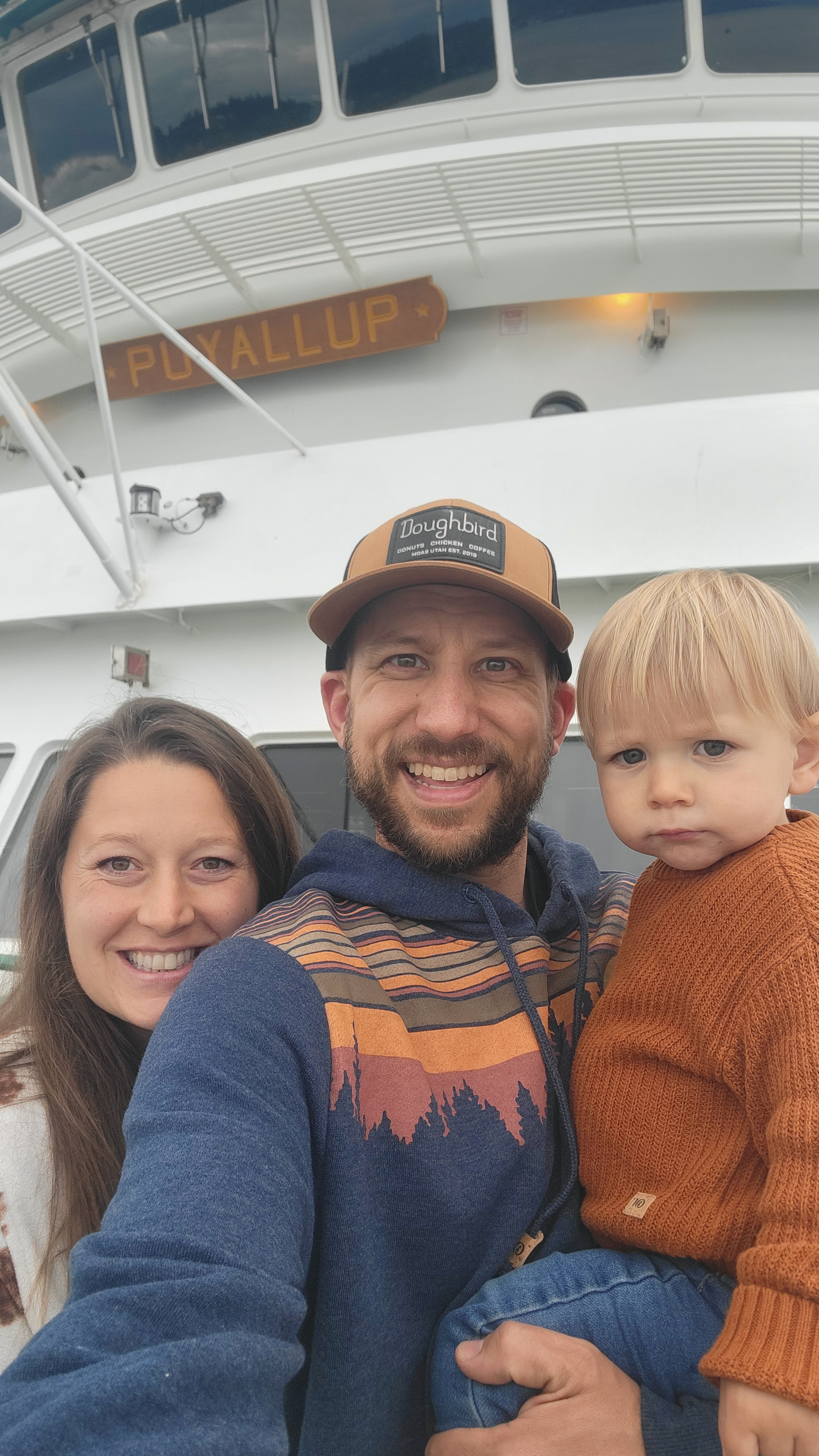
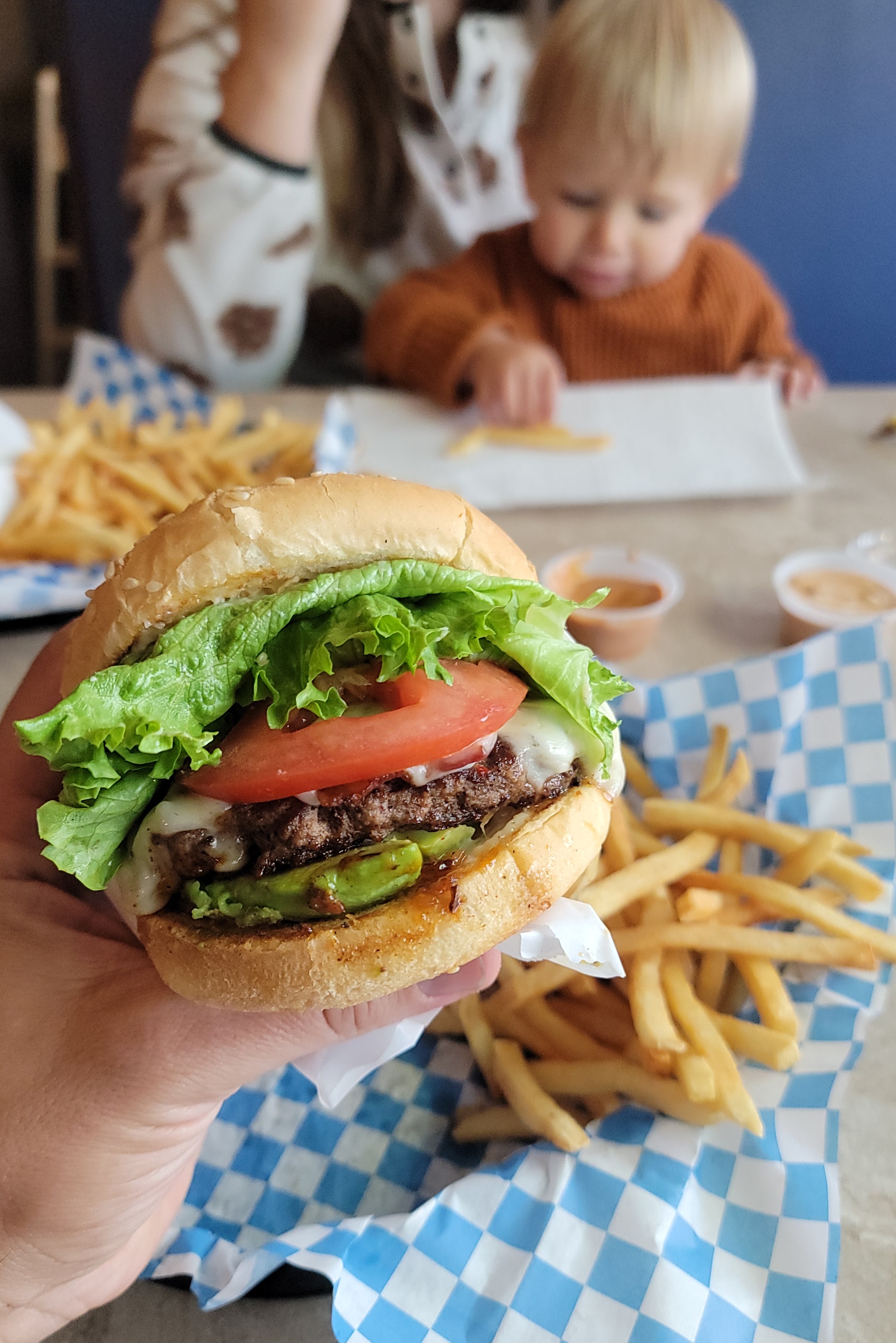
I got off work a little early Sunday afternoon, and we caught a 6pm ferry on the MV Puyallup from Edmonds to Kingston. Somewhat grumpy on the ferry ride, our toddler’s mood briefly improved while we waited for our dinner at The Grub Hub in Kingston, he quickly soured again when he was not given as many french fries as he believed he should have. Nonetheless, we enjoyed our burgers, and he came around again when he remembered he had mustard for his fries and further still when he got to wave at cars leaving the parking lot. For food, it’s hard to go wrong here, but I’m especially a fan of the El Verde Burger (tomatillo salsa, pepper jack, avocado), Uncle Marco’s BBQ Burger, and Tim’s Teriyaki Burger with grilled pineapple.


Past and Present
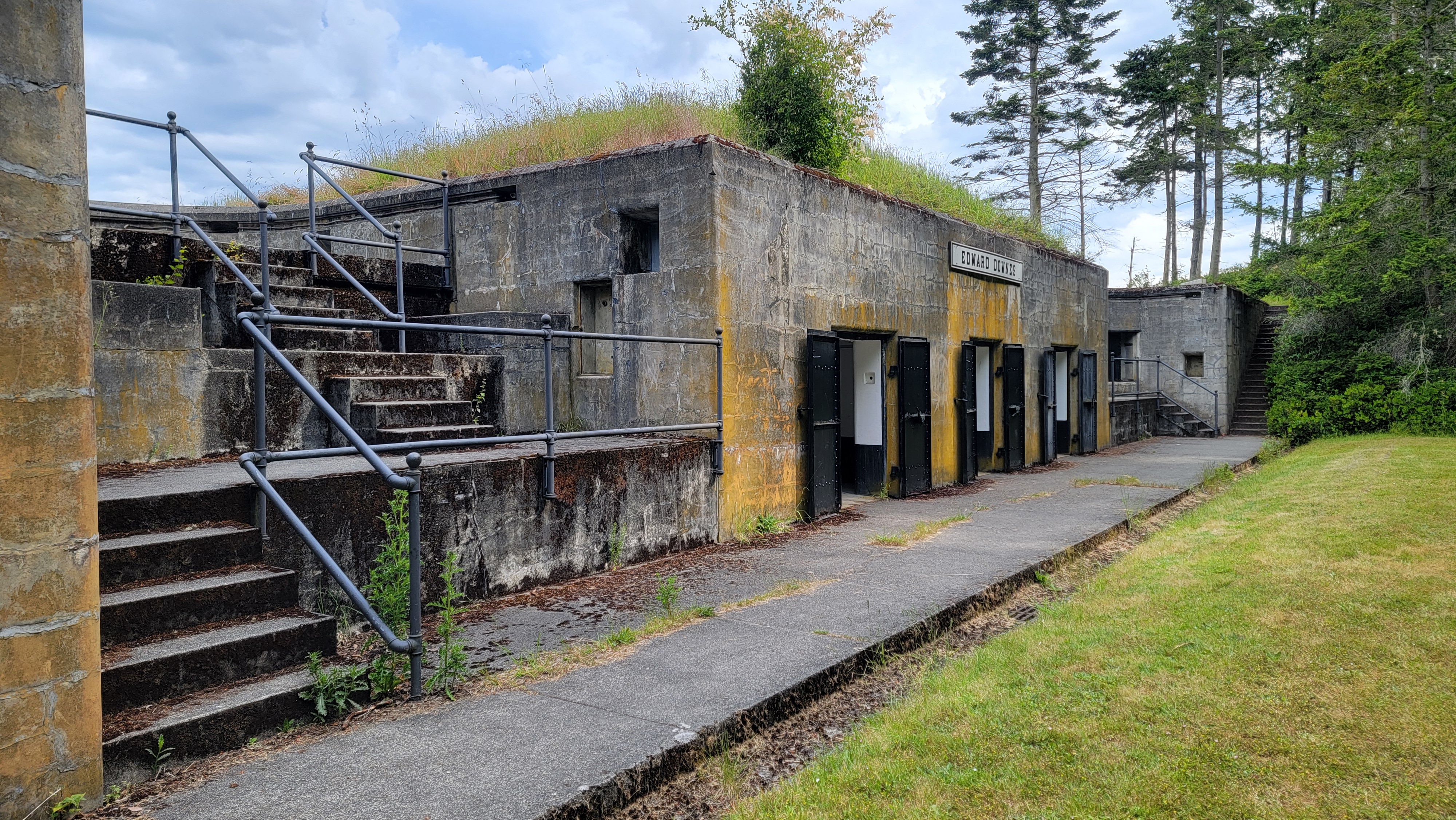
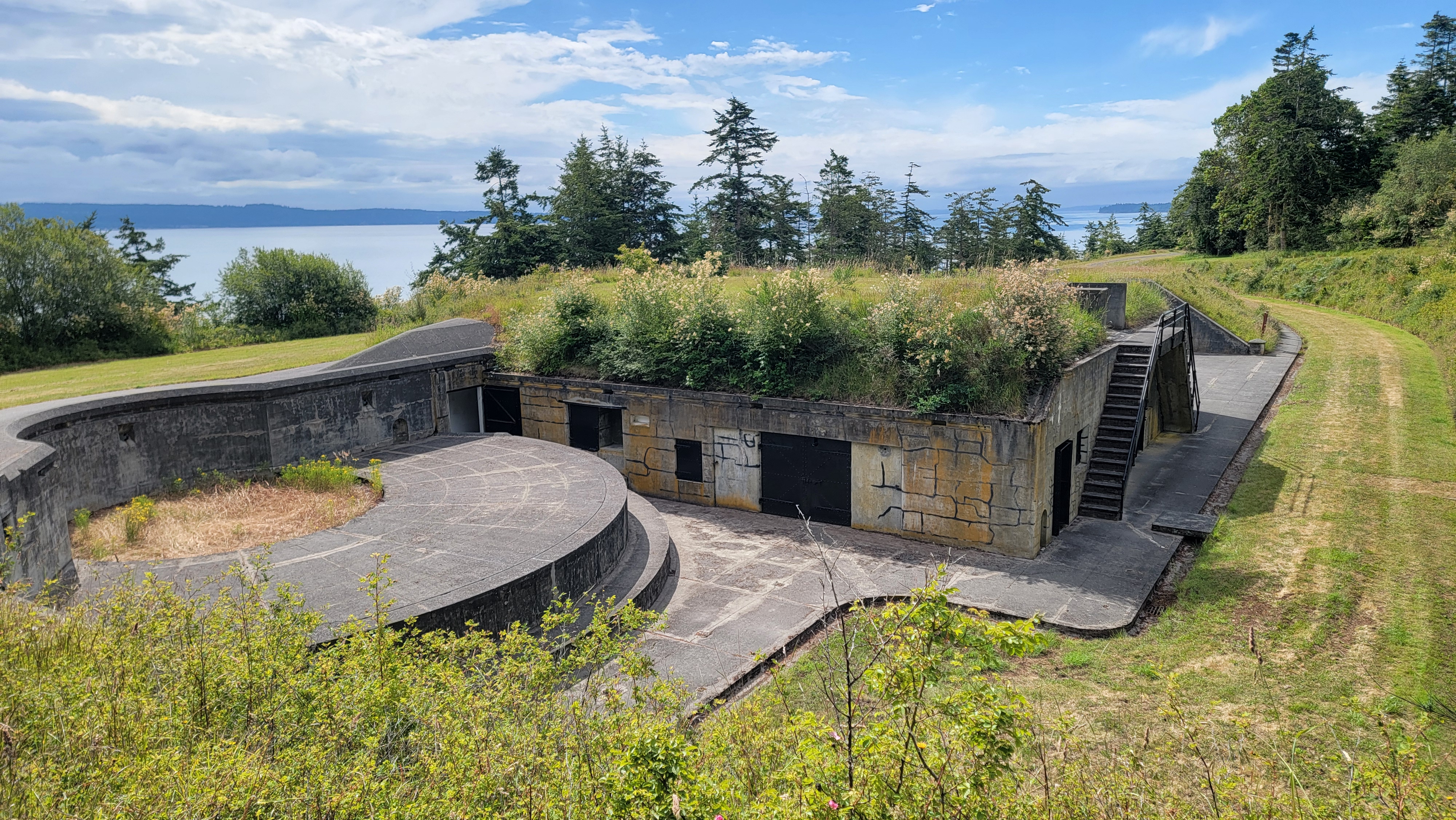
We arrived at Fort Flagler Historical State Park and our campsite just as the sun was setting, and quickly put camp together as twilight faded and the dense evergreen canopy swallowed the last of the light. Located on the north end of Marrowstone Island, and surrounded by Admiralty Inlet and Port Townsend Bay, Fort Flagler has a varied history. Used for untold generations by the Chemacum and S’Klallam peoples, the land was ceded under duress to the U.S. government in the Treaty of Point No Point in 1855. Immediately after, settlers began to arrive on Marrowstone and neighboring Indian Island, and in 1866, President Andrew Johnson designated the northern tip of Marrowstone as a military reservation.
In 1896, Congress authorized the construction of 3 military forts around Admiralty Inlet, combining Fort Flagler with Fort Worden (near Port Townsend) and Fort Casey (on Whidbey Island), creating a “Triangle of Fire” in which the artillery range from each fort overlapped, making no single part of the inlet passable by enemy ships. Fort Flagler was officially activated in 1899, but, before World War I, had already become obsolete due to advances in naval fire power and the rise of aircraft. None of the 3 forts ever was utilized against an enemy. After decades of use only as training grounds and housing, Washington State Parks eventually purchased the land for a historic park.
Today, the historic artillery batteries and some of the historic buildings are open for visitors to explore. The park features several miles of forested trails, as well as long stretches of scenic beach. The campground includes a forested upper loop with standard sites, and a lower campground with full hookups and water views. Both loops include restrooms with showers. In an ironic twist, today the neighboring Indian Island is under military control, as an active naval magazine with a deepwater ammunition pier plus ordnance storage sites over 2700 acres. It is not open to the public.
Carrots and Lavender
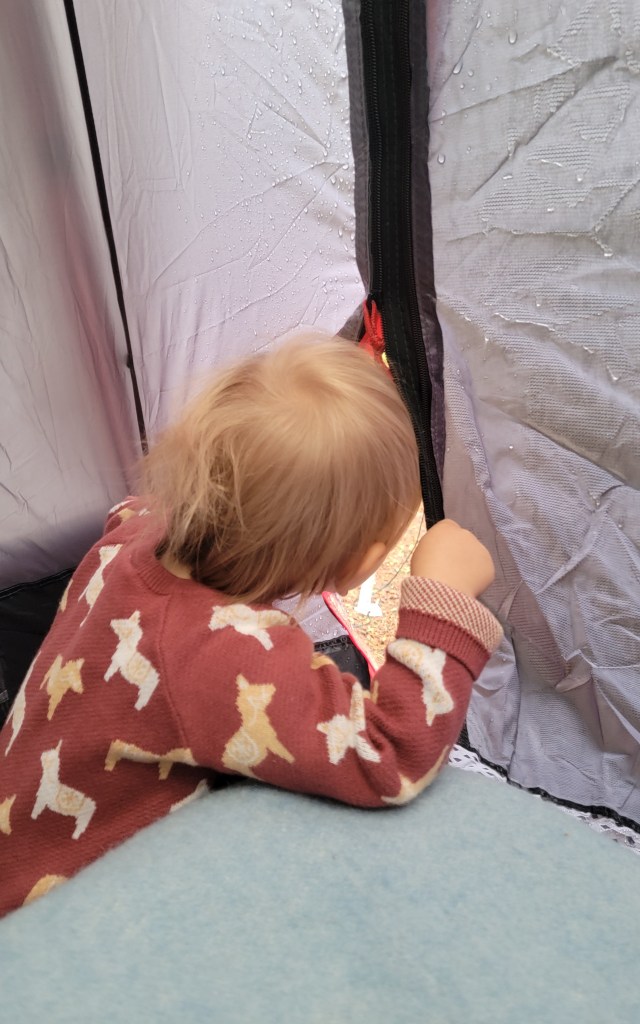
Early the next morning after a drizzly night, our little guy peered out of our damp tent in his Dala Horse pajamas (Nordstrom clearance, score!), eager to eat some oatmeal and head out for the day.
It was a little dreary to start out (thanks Puget Sound marine layer), so instead of spending the morning hiking or at the beach, we opted to head west to the town of Sequim (pronounced “skwim”) for some morning baked treats and a leisurely day of wandering. A town of about 8000 people, Sequim (named for the Klallam word sxʷčkʷíyəŋ, which means “hunting ground”) is renowned for numerous lavender farms, thanks to an almost Mediterranean climate, despite its proximity to temperate rain forests. Thanks to the leeward effects of the Olympic Mountains, Sequim lies in a rain shadow, receiving only about 16 inches of rainfall per year, as compared to Seattle’s 39 inches or 140 to 170 inches in Olympic National Park’s Hoh Rainforest.
We started our day at Rainshadow Cafe for some coffee, carrot cake, berry scone and a ham & swiss breakfast sammie. If you happen to be in town on a Saturday morning, hop just down the block to the Sequim Farmers & Artisans Market featuring over 50 local vendors. For a larger meal, Sequim has several great local food options, including all-day breakfast at Oak Table Cafe or pizza and PNW specialties at Alder Wood Bistro.


If you have the time and the weather is right, consider taking the 5-mile trek along the beach to New Dungeness Lighthouse at Dungeness National Wildlife Refuge. We completed this journey once several years ago, ironically during the first rainy August day during a record-dry summer. Nearby, you can view other animals up close and from the comfort of your car at the Olympic Game Farm, one of my favorite memories from childhood. Buy a loaf of incredibly unhealthy bread to feed the obese, waving bears, and get your windows covered in slime and slobber courtesy of bison, yaks and llamas.
Heading back east from Sequim, we stopped for a round at Rainshadow Disc Golf Park, ranked #5 in the state of Washington, and featuring hilly, forested fairways over a length of 2.1 miles. Most of the front 9 is not beginner friendly, and in our state of not-beginner-but-not-yet-amateur, we both hit our fair share of trees on most of the holes, yet still had a fun time, although my level of play definitely seemed to decline the more I had to carry our toddler (note to self: bring the Osprey child carrier next time).

For a more kid-friendly activity, our next stop was Sunshine Herb & Lavender Farm, with hundreds of organically-grown lavender plants to smell, touch and take home. They distill their own oils on site and produce many other lavender products. Our little guy loved wandering the gardens and watching the bees visiting the vibrant blooms. The annual Sequim Lavender Festival is held each July, but the farm and gift shop are open year-round.


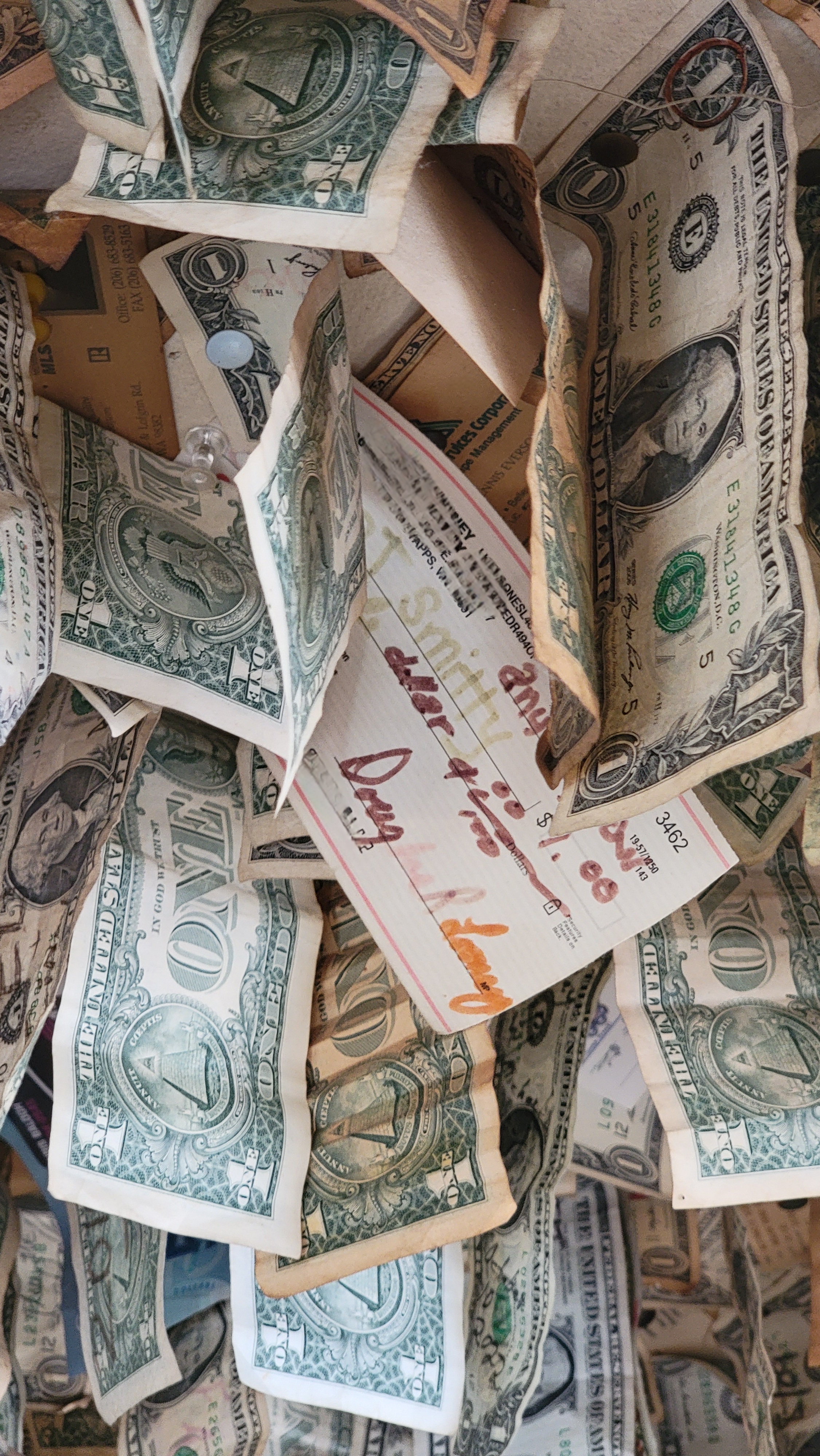
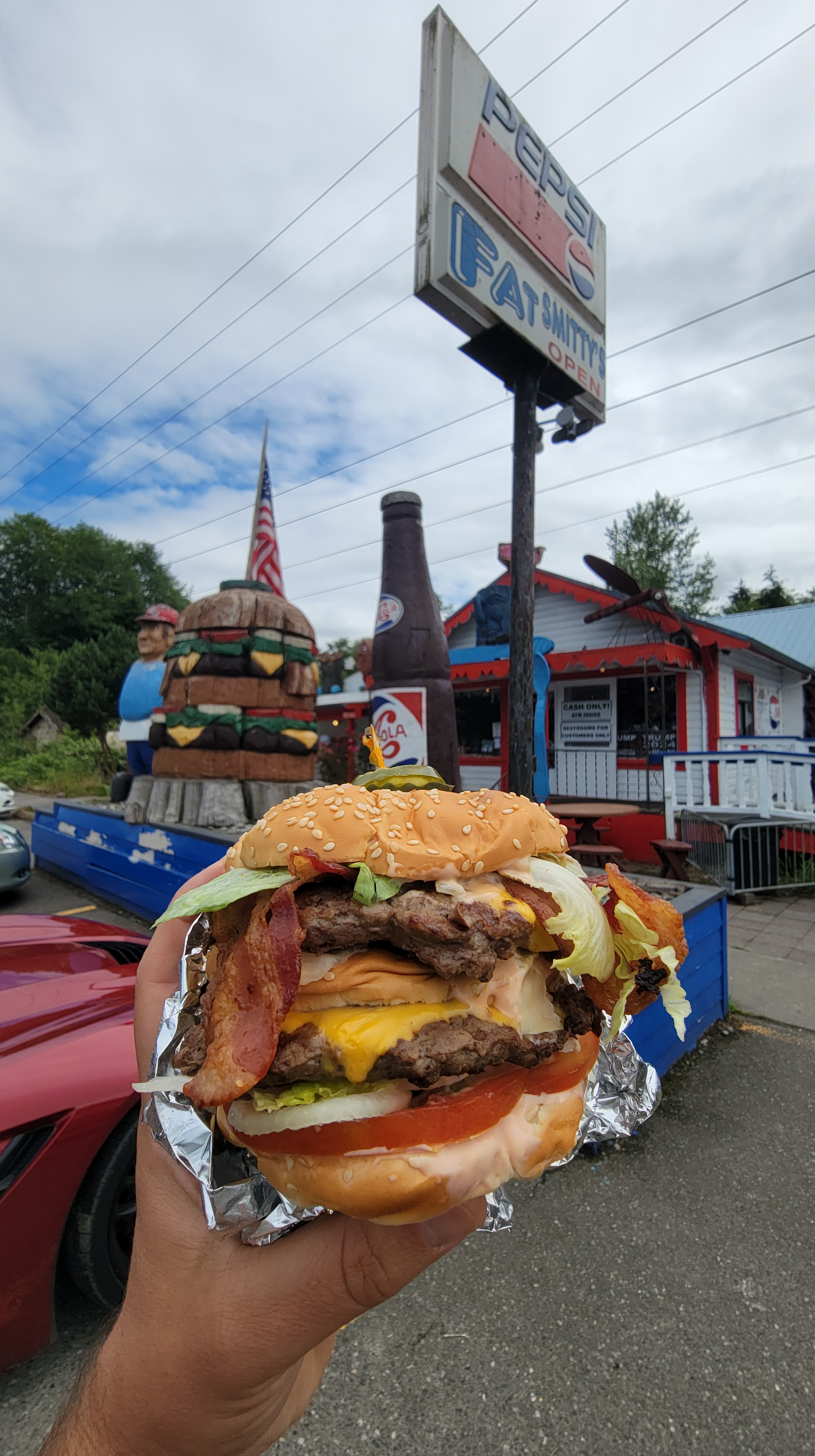
With appetites built up, we headed to Discovery Bay for burgers at Fat Smitty’s, a longtime Olympic Peninsula icon and an unforgettable experience to say the least. The first thing you’ll notice from the highway is the eclectic chainsaw carvings, including a giant double-decker burger, a Pepsi bottle, and numerous figures, both human and non-human. Inside, just about every inch of surface is covered, with thousands of personalized dollar bills plastered on the ceiling and walls, plus newspaper articles, school portraits, mementos, toys, and so much more. Beyond the Instagrammable experience, the food is pretty good, too, with giant burgers and fries for a reasonable price (note: bring cash, no cards accepted).


Nootka Rose and Grand Fir
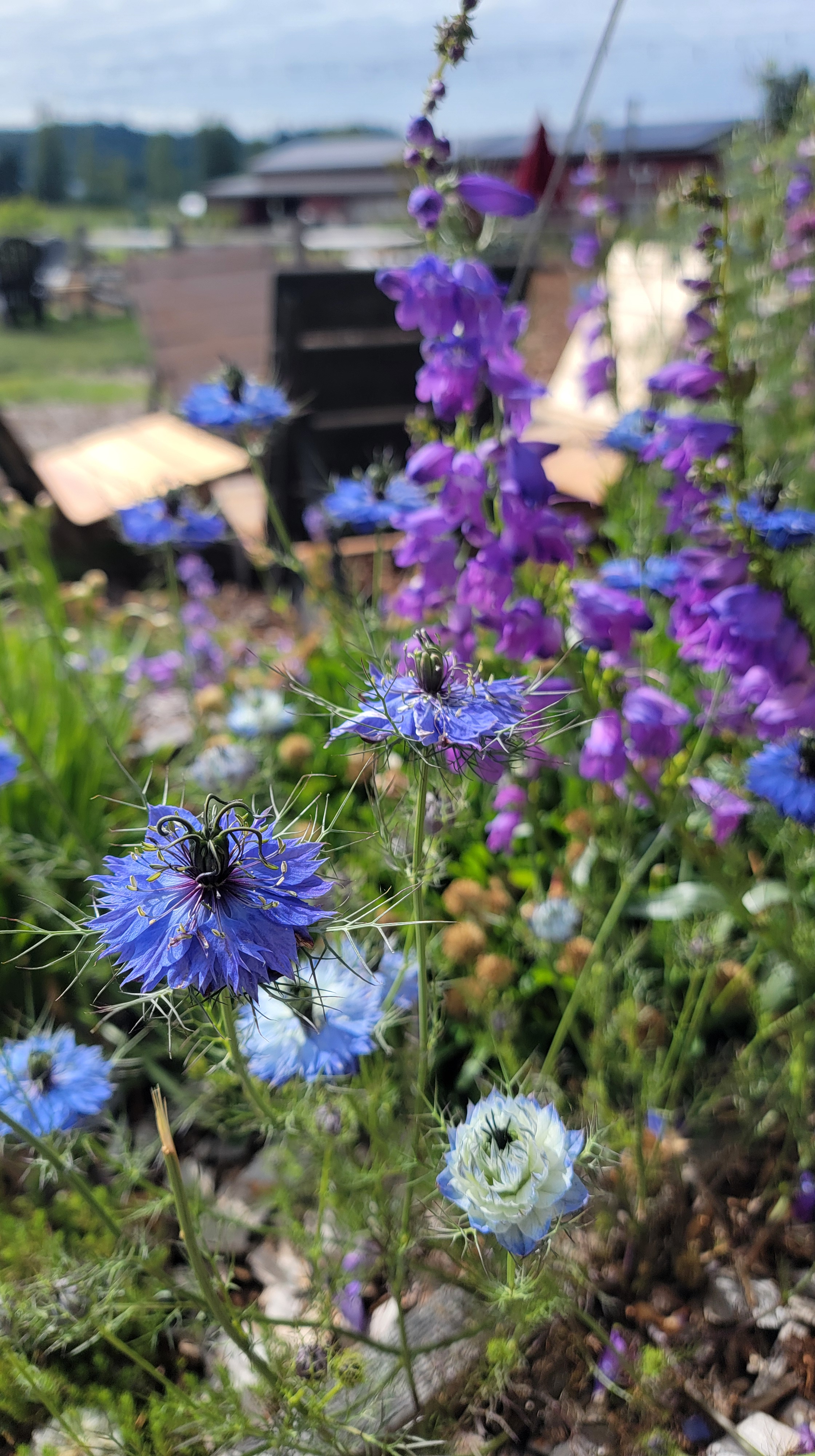
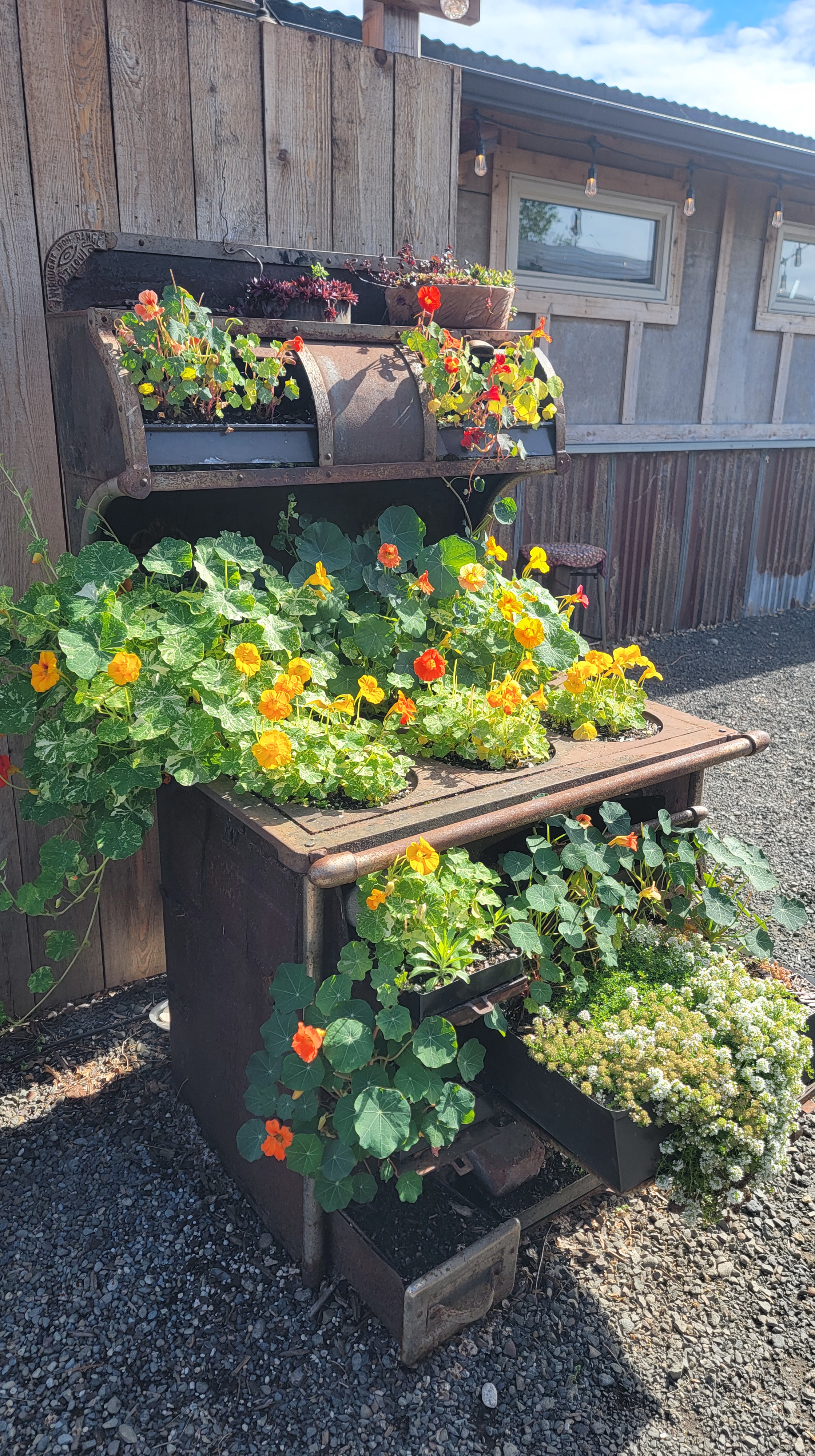
To wash it all down and finish our day out, we stopped at my favorite local cidery, Finnriver Farm & Cidery. Featuring numerous specialty varieties utilizing organic apples and botanicals grown on-site, Finnriver also provides a beautiful setting to wander, enjoy a picnic or attend an event. Of the many tasty options, my favorite ciders are Tideline (with golden russet apples, nootka rosehips and Grand Fir tips) and Lavender Black Currant (semi-sweet with local organic Royal Velvet lavender).


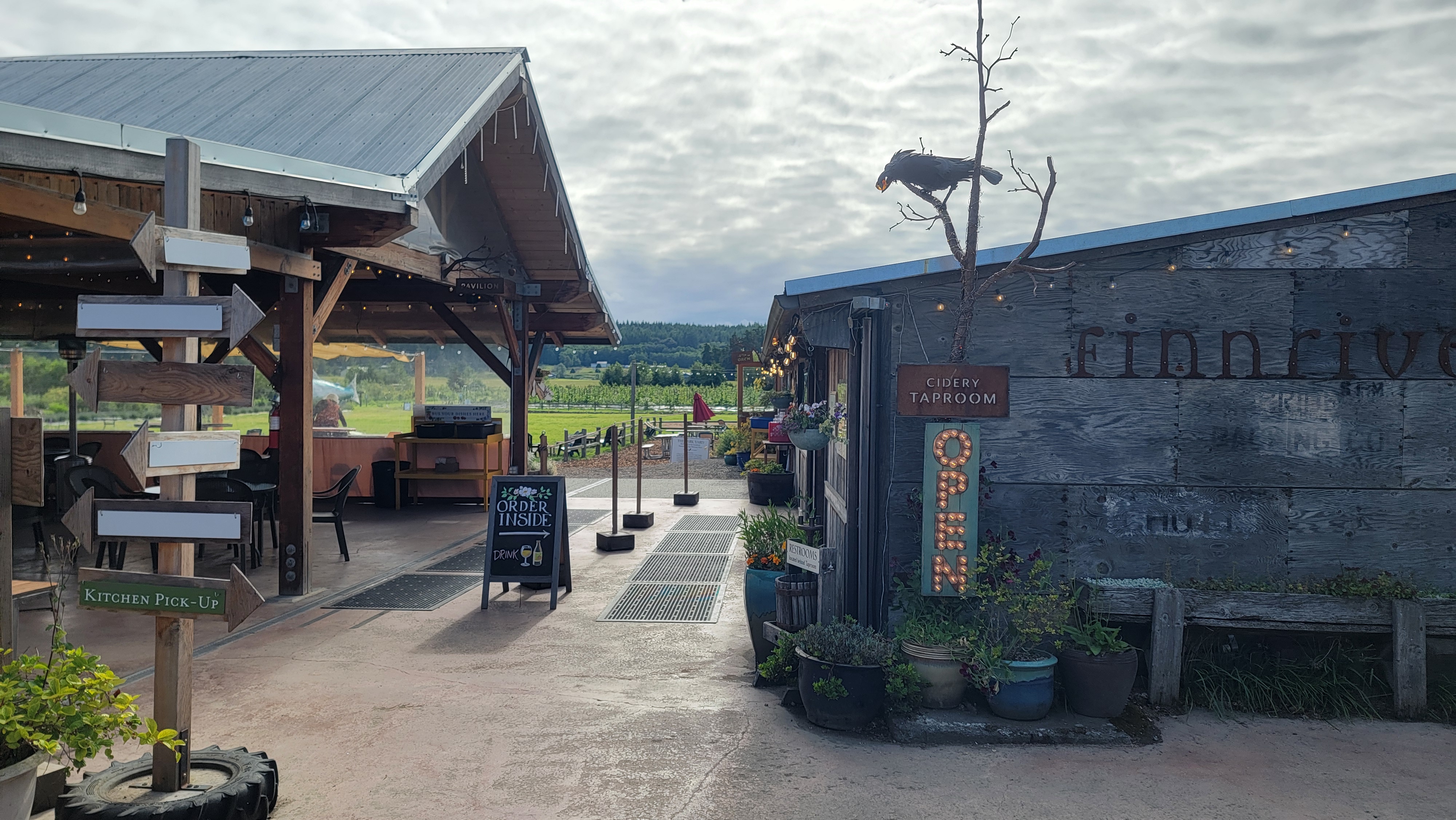

Other great local cider options include Alpenfire Cider and Eaglemount Wine, Cider & Mead
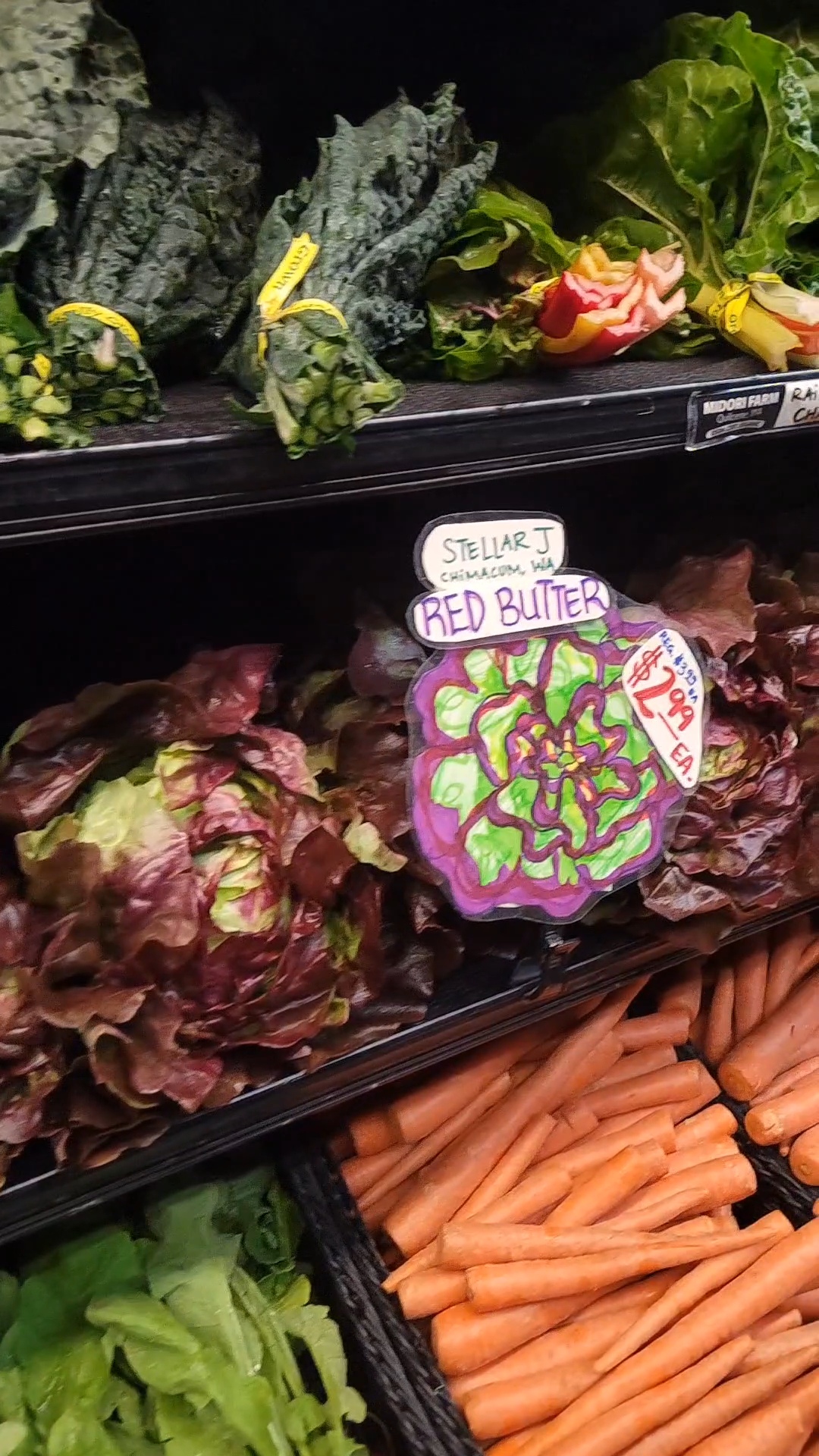
If you choose to stop by Finnriver, make sure to stop at Chimacum Corner Farmstand just up the road for local produce and a wide variety of other natural and organic food and drink options. When we stopped, deep red cherries beckoned us from their little green baskets, while fresh cool season veggies such as chard, carrots and various lettuces painted a colorful picture in the chilled shelves.


Forests and Waters
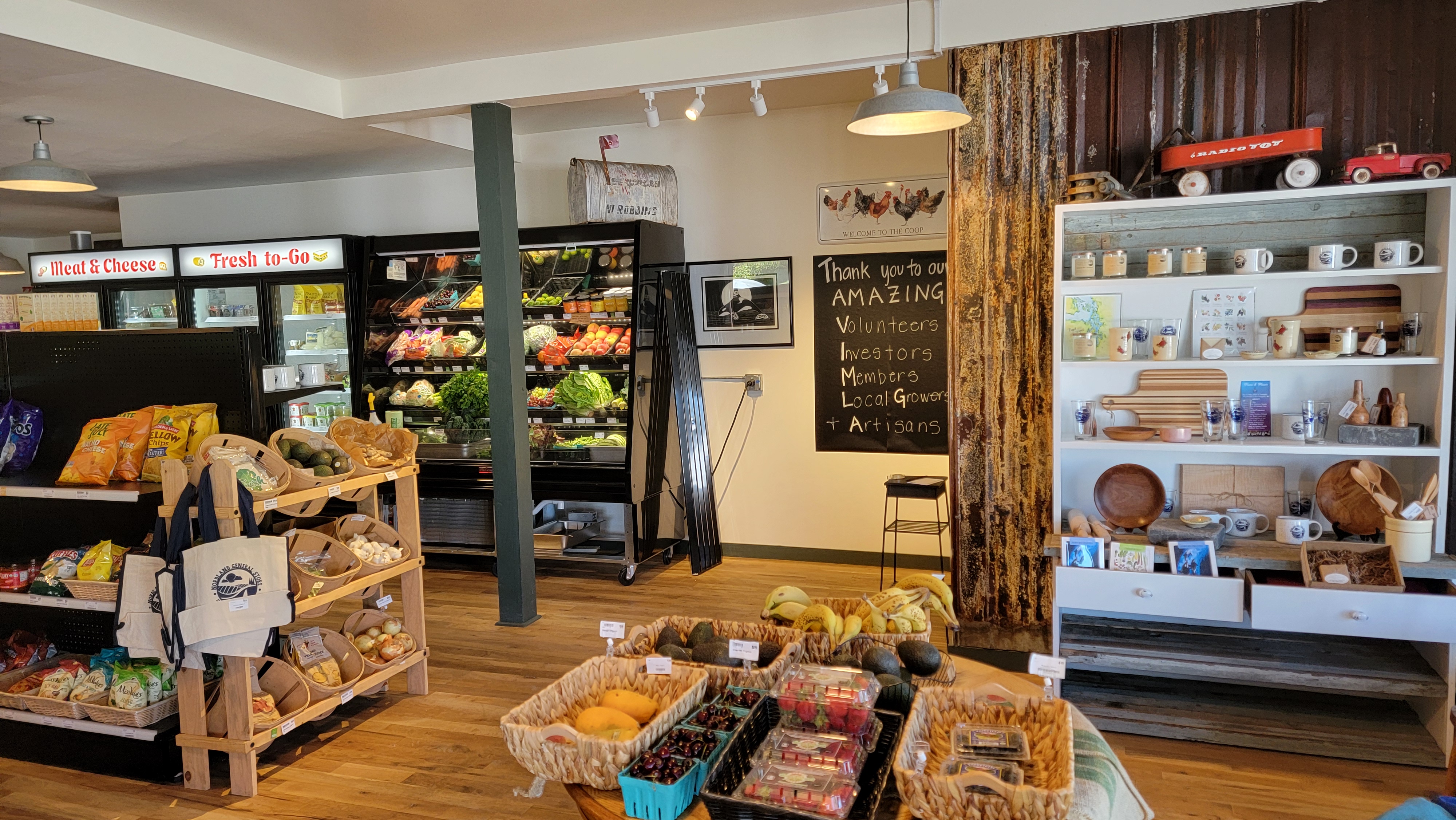
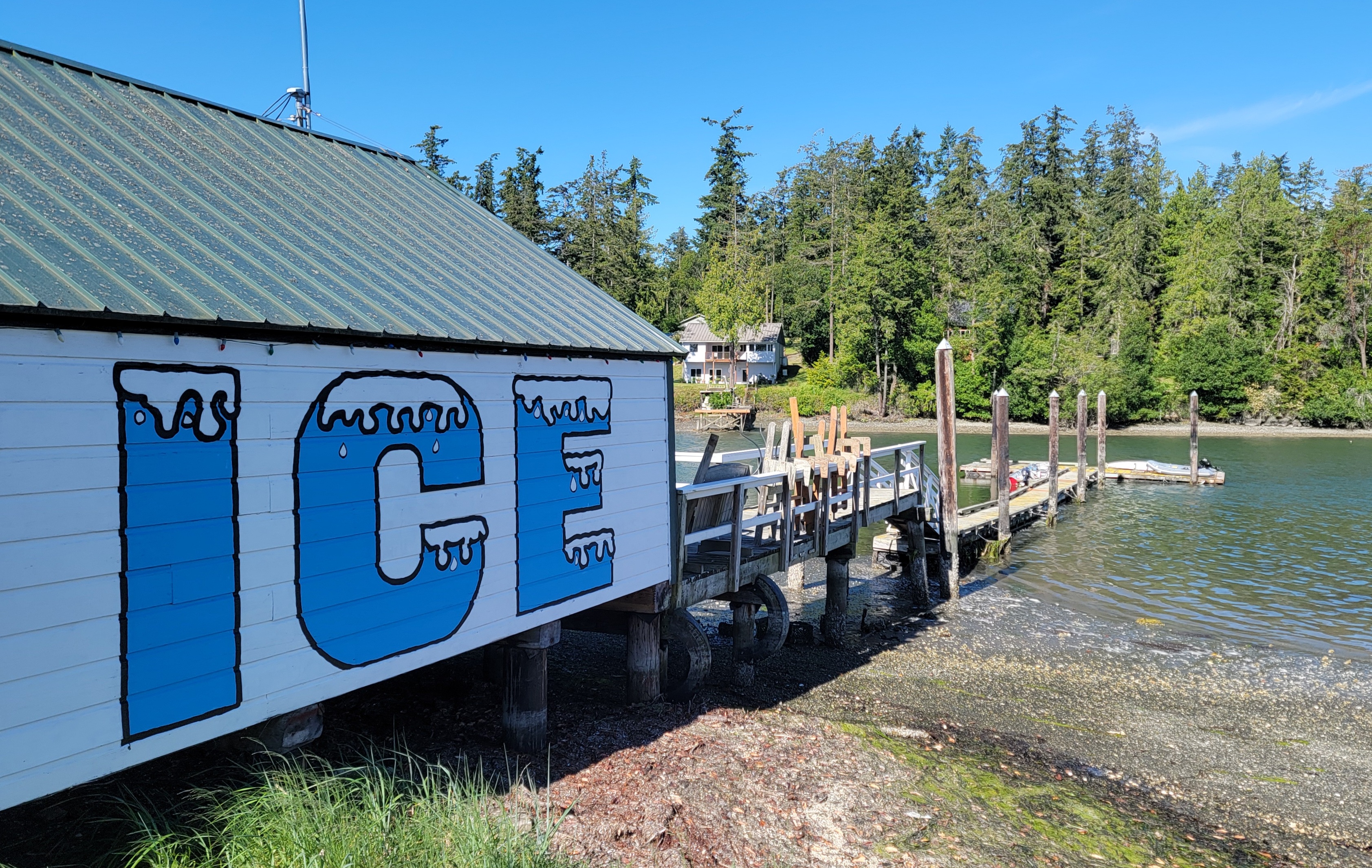
Our second day was a little out of the ordinary, and notable yet not terribly eventful. After breakfast in camp, we made a quick stop at Nordland General Store, a local cooperative offering gifts, snacks, and local goods, in a scenic spot along the south end of Mystery Bay.


We stopped by a few local farms in the Port Hadlock-Irondale area searching for some local goods to add to our lunch and dinner, and then headed to the forest to do a little adventuring. Unable to find something close by, we ended up driving all the way to Quilcene, where supposedly there was a scenic waterfall trail in Olympic National Forest. In an uncharacteristic moment of non-planning on my part, I failed to save any of the hike information to my phone, and we quickly lost service. The old ranger station was shut down, so we were heading to the trail knowing approximately where it was and that there was a waterfall along it.
The trail is called Fallsview Canyon, and is only about a couple miles round trip. We got to the primitive campground and parked, and headed down into the canyon, losing about 200 vertical feet in a tenth of a mile. We stopped at a scenic view of the Big Quilcene River, and crossed a small footbridge. After some more forest rambling, we realized the trail had looped back toward the direction we came, and didn’t seem to continue any further along the river. We had yet to find the waterfall, and the limited loading on Google Maps did not indicate anything further up the river.


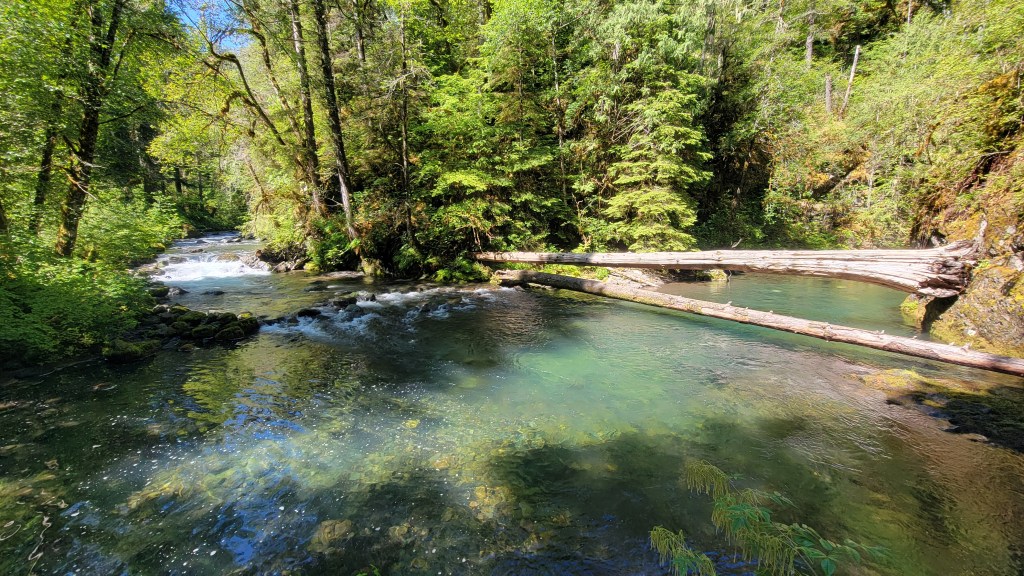
After retracing our steps and finding no other trail, and a few minutes of debating how to find the waterfall, we decided to continue the loop back toward the beginning, and scaled the hill once again to the parking area. Frustrated and confused, we unloaded at the car, and then I decided to walk a few steps down a flat path adjacent to the parking area. After only a tenth of a mile, I reached a chain-link fence at the edge of a sheer cliff. I gazed across the canyon, and, lo and behold, there was a waterfall, cascading down the opposite face into the river. Had I read the trip description before losing service, I would have noticed a remark about this. For what it’s worth, the falls is pretty but nothing horribly amazing…in an ironic twist, the aimless walk through the woods ended up being much more scenic.
Moral of the story, read the trip description while you have cell service, and screenshot the page for later reference.
Boomtown and Arts Town
Back up north, we spent the afternoon in Port Townsend. Founded in 1851, Port Townsend is the 3rd oldest town in Washington State, with the bay originally named “Port Townshend” by Captain George Vancouver in 1792. Known as the “City of Dreams,” early maritime investors believed it would one day be the largest harbor on the entire west coast of the United States, with a boom in development in the late 1800s. After several thriving decades of international shipping, Port Townsend saw a significant slowdown during the Great Depression, followed by the unfortunate news the Northern Pacific Railroad would not arrive in town and connect it to Tacoma.
Today, the town is a popular place for retirees to settle, and has a thriving arts & culture scene, and is a major draw for tourists. Many of the buildings downtown date back over 100 years.

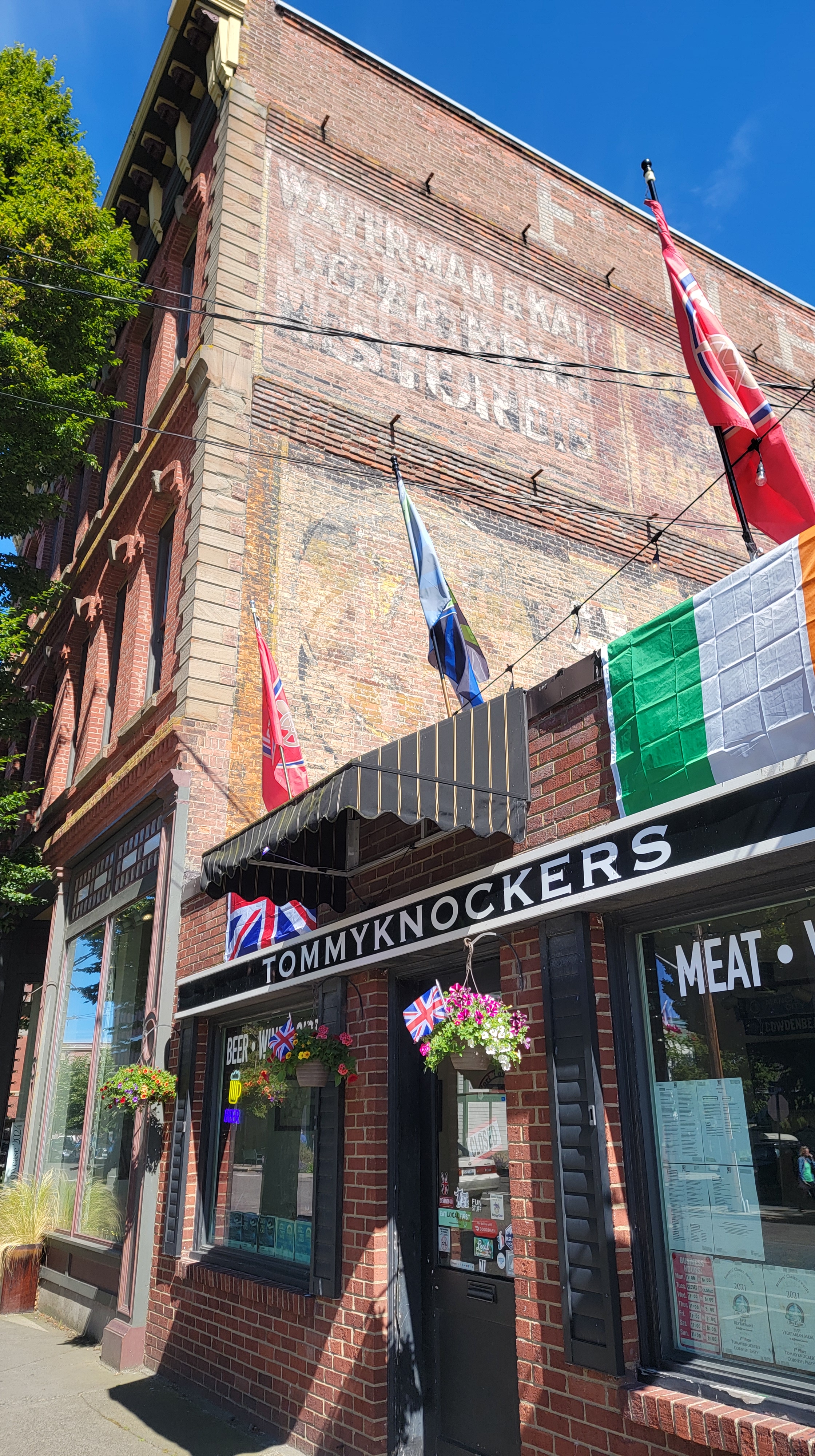
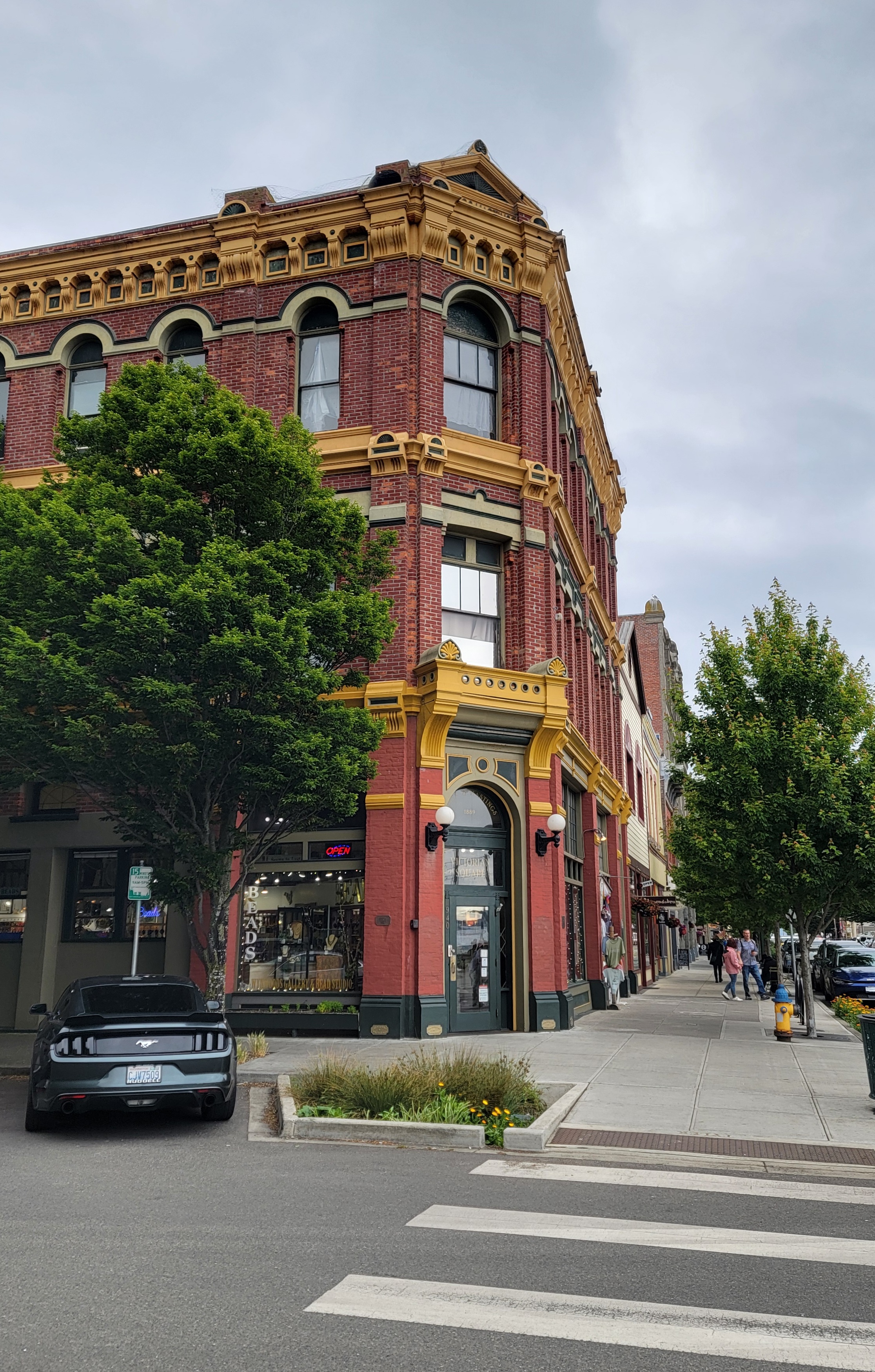

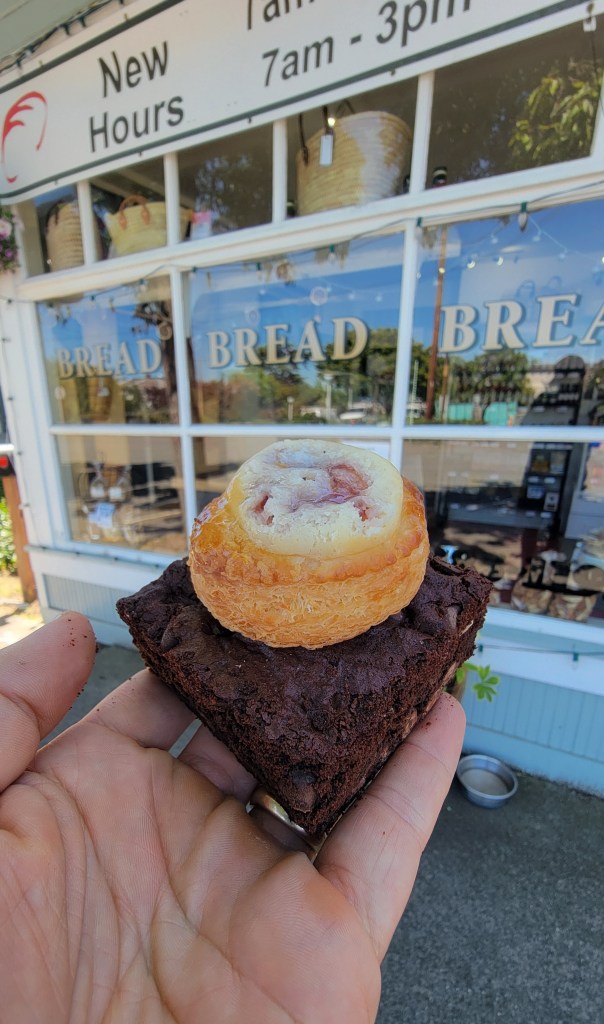
Avoiding the busier streets downtown, and seeking an empty charging port for our car, we parked at a small church up the hill from Main Street that had a community charger (we made a donation, of course), and walked a few blocks to Pane d’Amore Artisan Bakery for a rich chocolate brownie and a flaky cherry pastry.
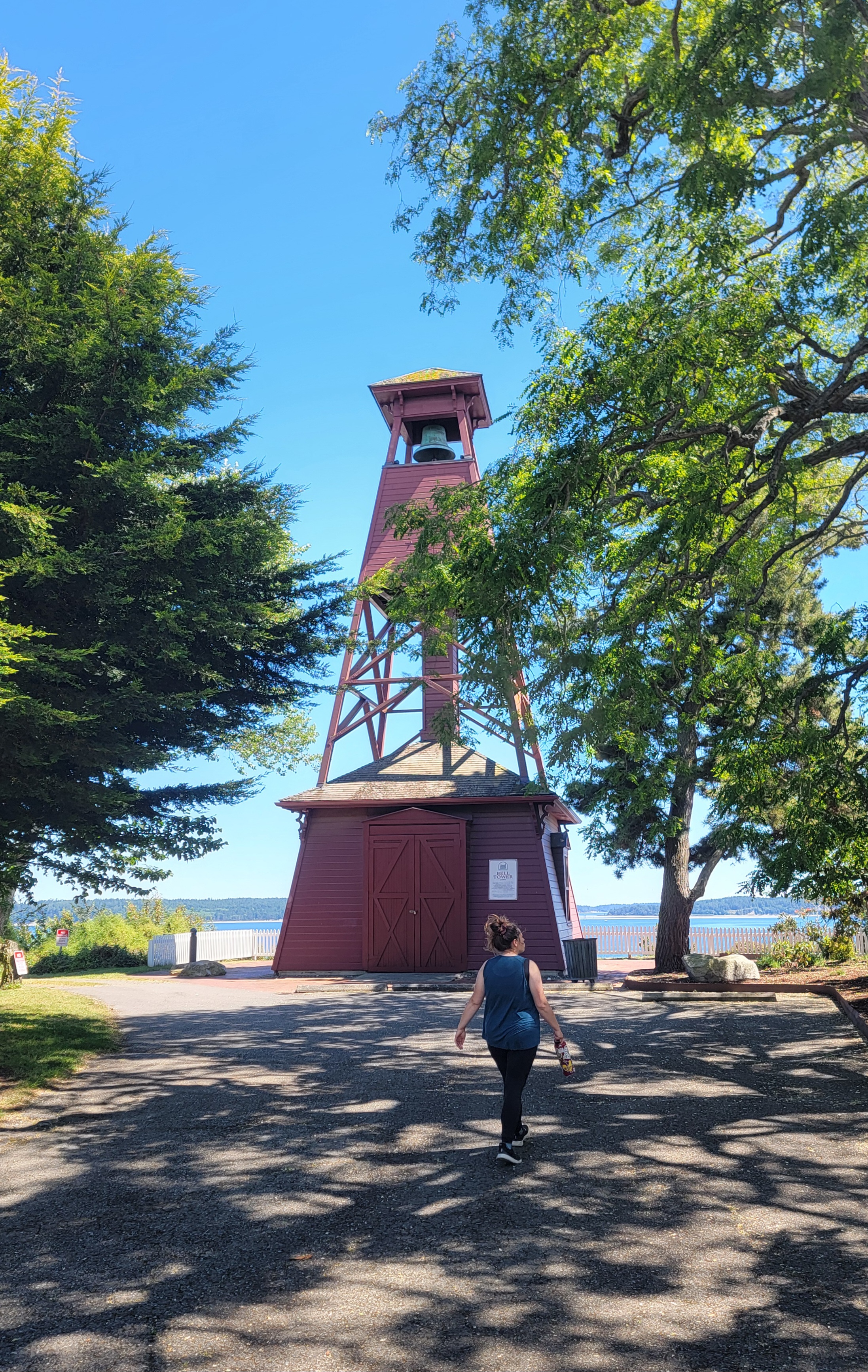
Two blocks south, we stopped to admire the view at the historic fire bell tower, built in 1890 high above the town. From here you can see Mount Rainier looming above Indian Island to the south, plus the iconic panorama of Whitehorse Mountain, Three Fingers, Glacier Peak, Mount Pilchuck and many other North Cascades peaks. Just one block to the left, steps descend to the Haller Fountain and the level of Water Street, the main drag through the historic downtown.


We have a few favorites in Port Townsend, namely Better Living Through Coffee for a morning pick-me-up; Abracadabra for games, puzzles and novelties; Millstream for locally-inspired and crafted clothing and art, and Imprint Bookshop for book perusing. We also enjoyed the new welcome center/interpretive center at Northwest Maritime and viewing the boats at the Point Hudson Marina.


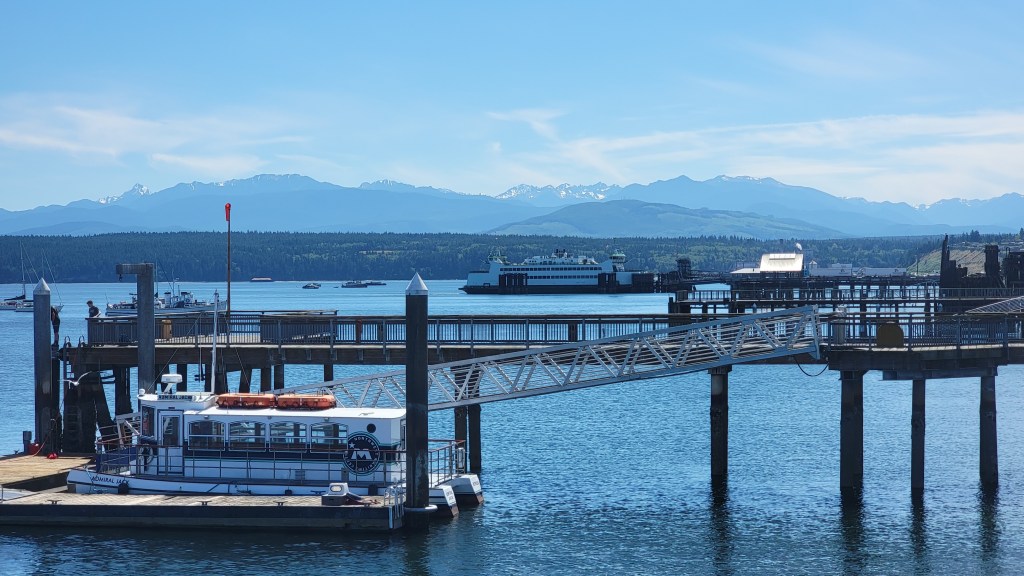
As referenced earlier, Fort Worden Historical State Park is just outside of town, and features more historic gun batteries, the Point Wilson Lighthouse, and a campground, plus beaches and 12 miles of forest trails spread across 433 acres.
Nightmares and Final Moments
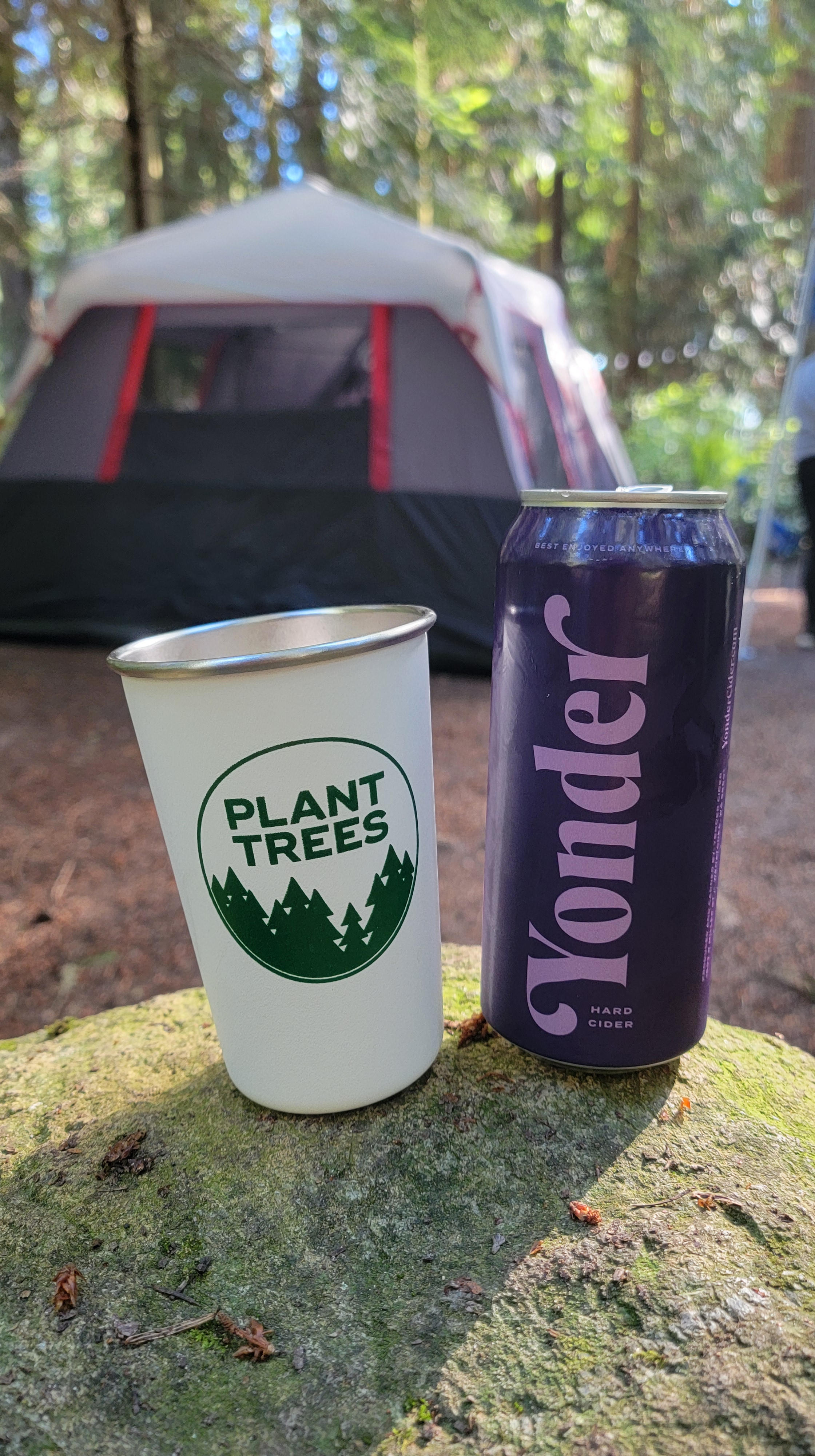
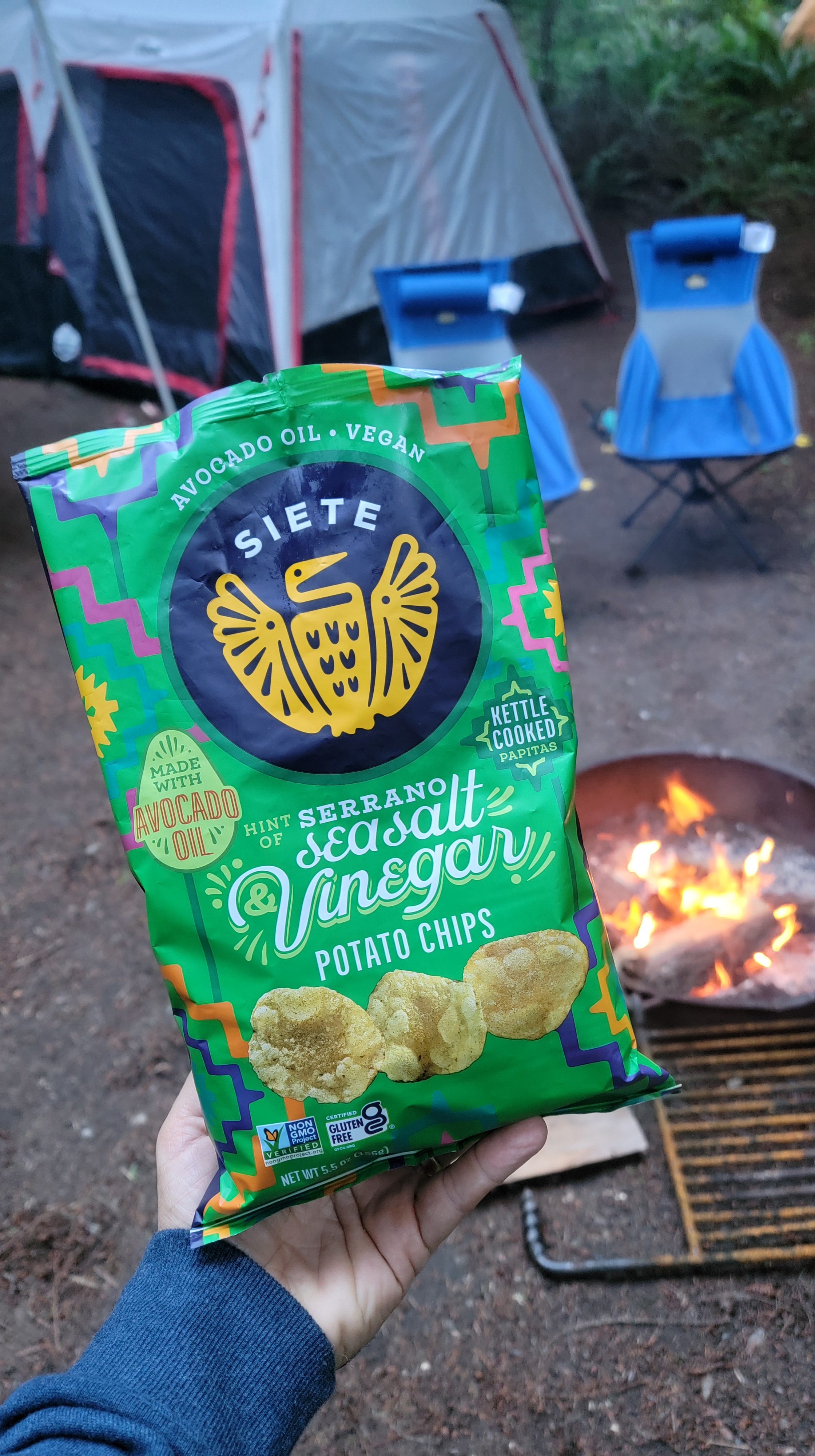
That evening, we spent some time at the beach at Fort Flagler, though the breeze kept us from staying long. We enjoyed some Yonder cider and Siete serrano sea salt & vinegar chips in the campground, and then attempted to go to sleep, only to be kept awake by some very creepy musical notes coming from the campsite across the way (think: music that would accompany a spooky scene in some creepy doll movie). It was not until this past winter when someone gifted our son a stuffed rabbit that supposedly played “lullaby music” that I realized what we actually heard that night. Suffice to say, our toddler slept great…us, not so much.
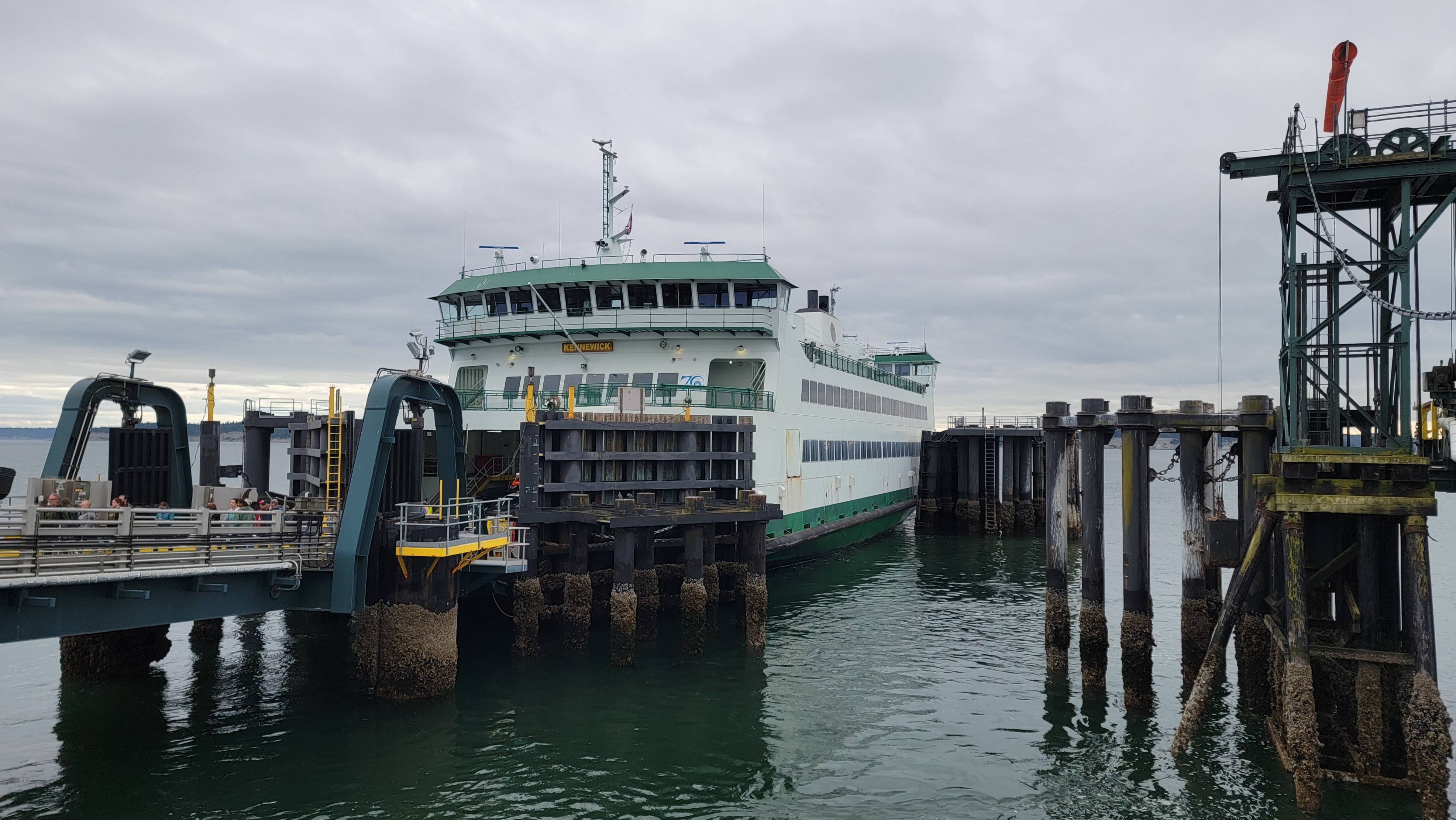
On our final morning, thoughts of some murdering puppet coming into our tent chased away by daylight, we ate, packed up, and then hit the trails in the park, making a large loop through some of the historic gun batteries, and other parts of the fort. Several areas provided water views, and we encountered a couple families of deer having their own breakfast in the meadows. We stopped for another round of eggs, potatoes and bacon at Blue Moose Cafe, then boarded the ferry to Whidbey Island as the clouds rolled in with a chill (note: this ferry requires reservations!)

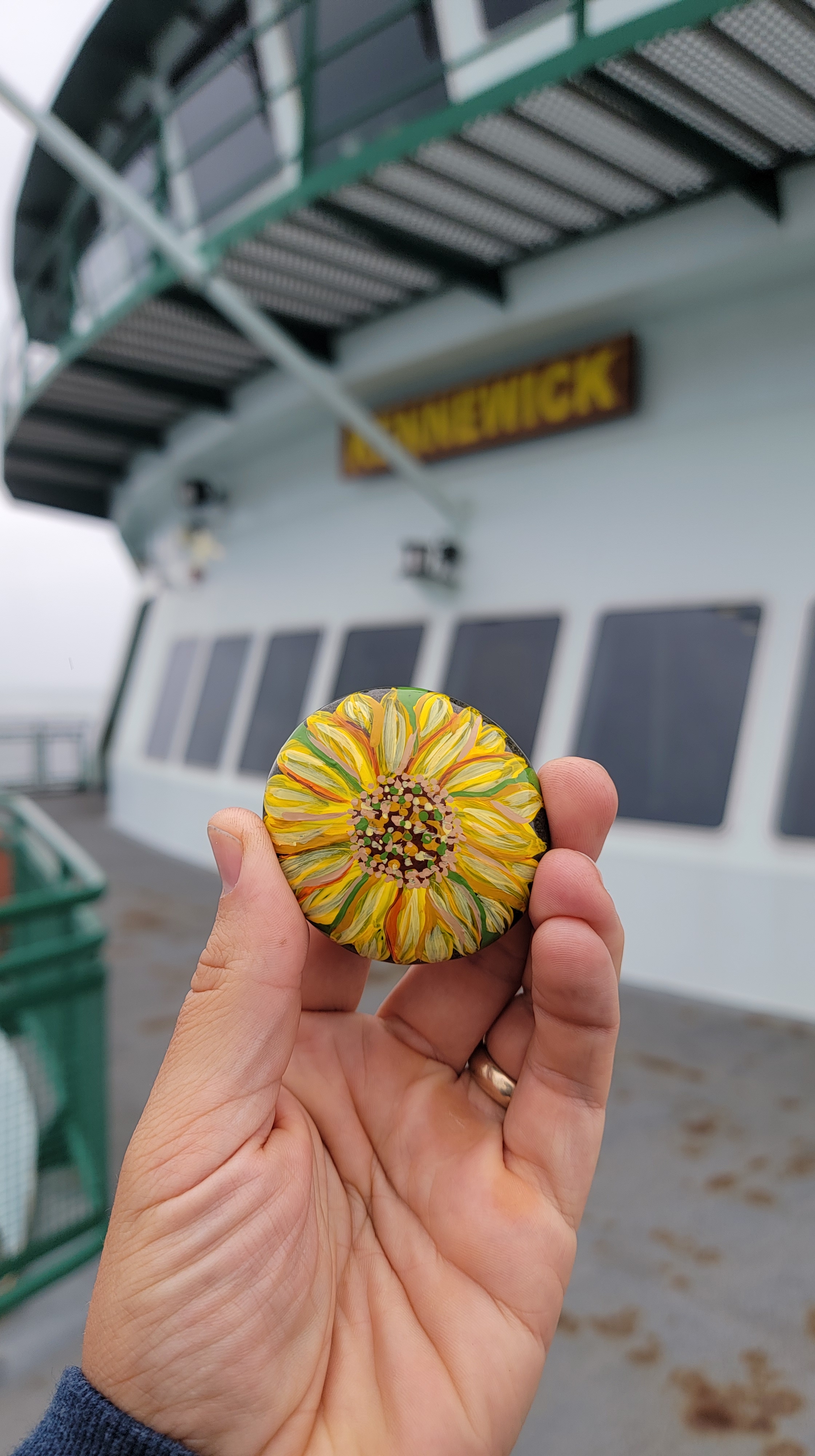
On board the MV Kennewick, we avoided the chill by working on a puzzle in the Main Cabin. I happened upon a cheery painted rock at the front bay windows, and stepped out into the dreary fog as Admiralty Head Lighthouse came into view, a lamp-less beacon that our trip was coming to a close.
All photos and content © Eric S. Allan 2024-2025
For media and publication inquiries: eric@treelineguides.com
 Treeline Adventure Guides
Leave a comment